Freeshipping for over $70 purchase

7 Best Effect Filaments for Paint-Free Prints: From Modern Home Decor to Epic Props

Quick Answer: The best effect filaments eliminate the need for sanding, priming, and painting by providing a retail-ready finish straight off the build plate.
The top choices for makers and designers include Matte PLA for hiding layer lines, Wood-fill PLA for organic, stainable textures, Silk and Dual-Color PLA for glossy, color-shifting visuals, and Crystal PETG for glass-like light diffusion.
If you are tired of your 3D prints looking like cheap, shiny plastic, you are not alone. Whether you are manufacturing modular desktop organizers or fabricating intricate cosplay armor, the post-processing phase—sanding, filling, and painting—is often the most tedious part of any project.
When researching the best effect filaments Reddit users and the broader maker community swear by, the consensus is clear: the modern 3D printer is no longer just a prototyping machine. With the right materials, it is a manufacturing tool for finished, tactile goods.
Here are the 7 best effect filaments to help you ditch the sandpaper and achieve flawless, paint-free finishes, along with expert tips on how to print them perfectly.
1. Wood-Fill PLA (Organic & Tactile Craft)
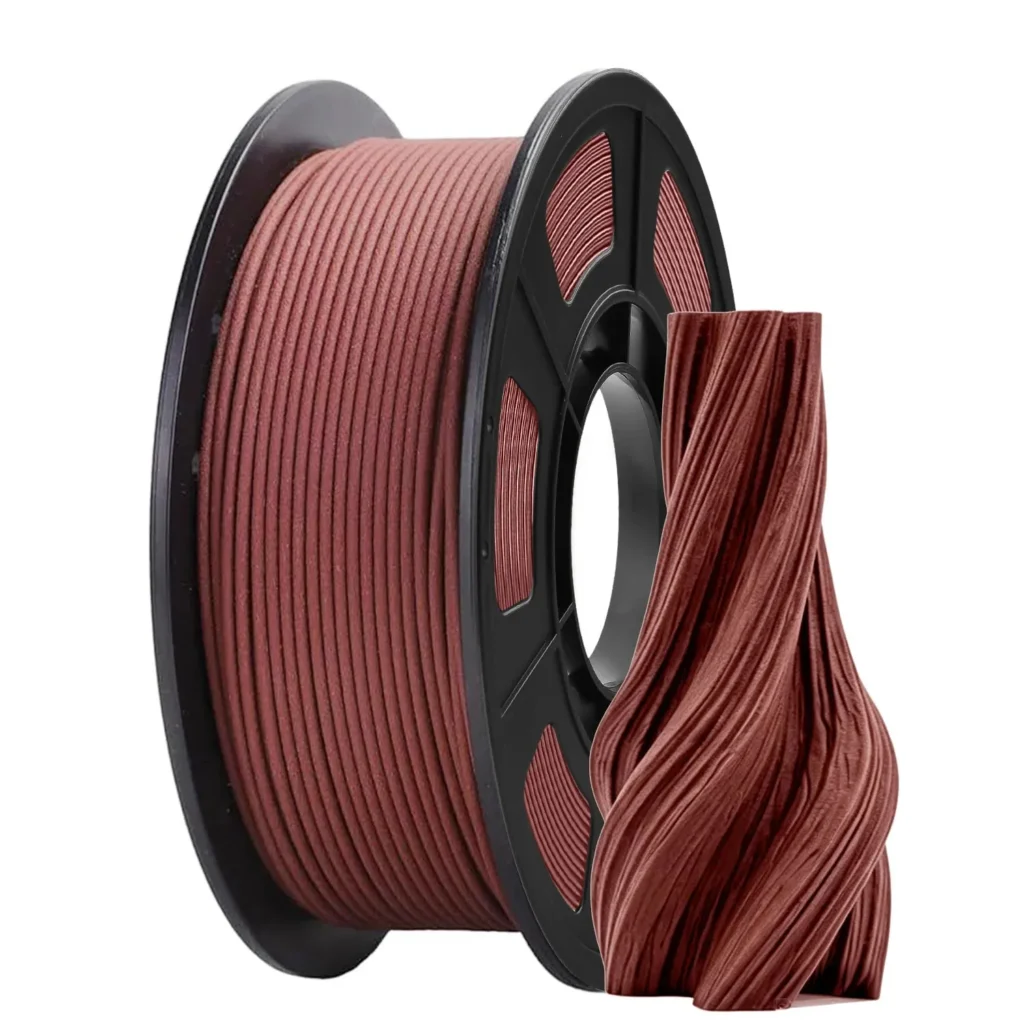
Wood-fill filament bridges the gap between digital modeling and the traditional woodshop. Infused with real wood fibers (typically around 20-30%), this material doesn’t just look like timber—it feels and smells like it. Because it contains actual organic material, you can treat it like real wood, allowing it to absorb standard wood stains and oils beautifully.
- How to Print It: Because of the physical wood fibers, this material is prone to clogging standard 0.4mm brass nozzles. Upgrading to a 0.6mm nozzle is highly recommended. To reduce stringing, lower your retraction distance slightly. For a brilliant “tree ring” effect, you can actually vary your hotend temperature by 5-10°C every few dozen layers—the hotter the nozzle, the darker the wood fiber will burn, creating artificial wood grain!
- Common Use Cases: This is the ultimate choice for printing custom furniture joints, architectural models, headphone stands, and tactile prop components (like sword hilts or faux-wood barrels for tabletop games) that need to blend seamlessly with actual timber.
- Explore DART3D Wood-Fill Filaments
2. Matte PLA (Minimalist Home Organization)
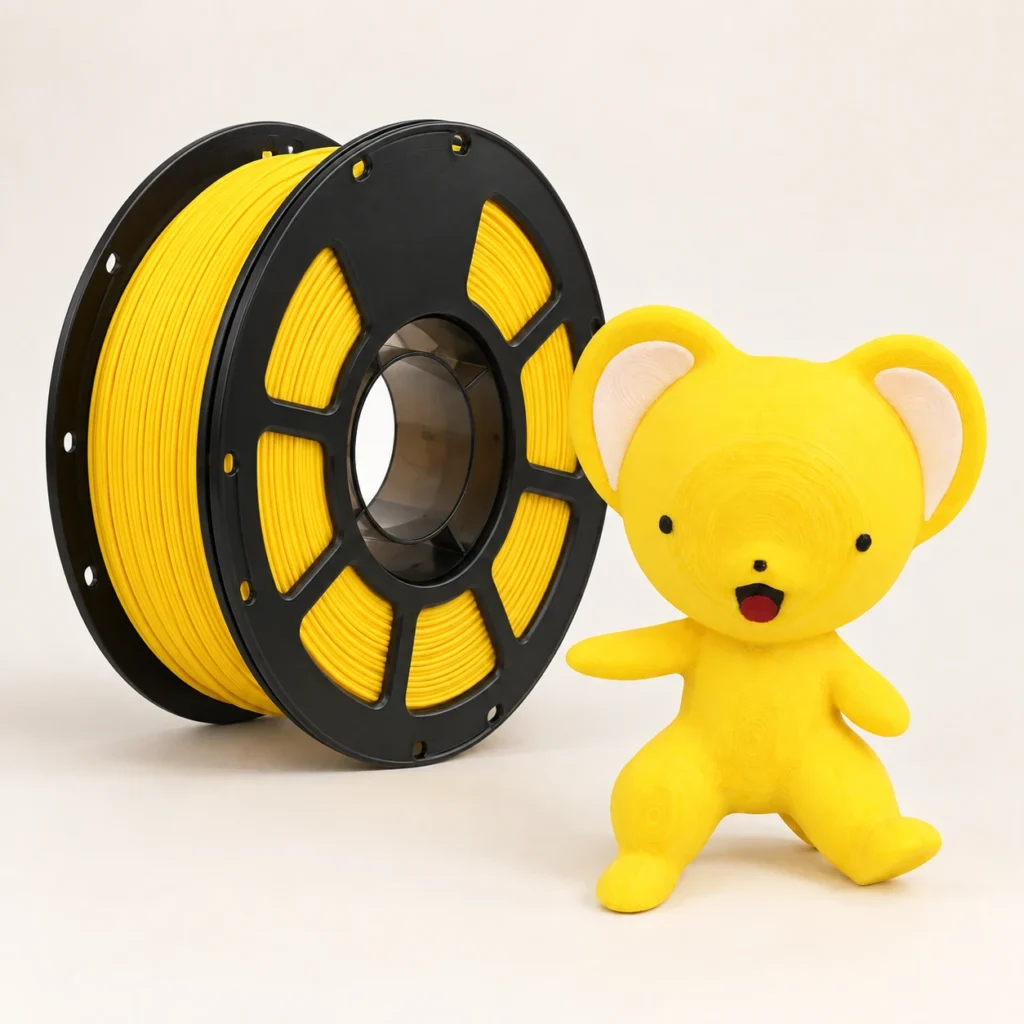
If you are designing functional home goods, Matte PLA is your everyday workhorse. Standard PLA has a glossy sheen that aggressively highlights every single layer line and surface imperfection.
Matte PLA is formulated to absorb light rather than reflect it, which effectively camouflages layer lines and gives your print the premium, heavy look of cast ceramic or machined polymer.
- How to Print It: Matte filaments often have slightly weaker layer adhesion than their glossy counterparts due to the additives that create the matte finish. To compensate, print 5°C to 10°C hotter than your usual PLA profile and bump your extrusion multiplier (flow rate) up by 1-2%. This ensures the layers fuse tightly.
- Common Use Cases: Matte earth tones and industrial neutrals instantly elevate a 3D print. It is the definitive material for minimalist planters, desk organizers, shelving brackets, and photography props where you want absolutely zero light glare.
- Explore DART3D Matte PLA
3. Crystal & Transparent (Light & Diffusion)
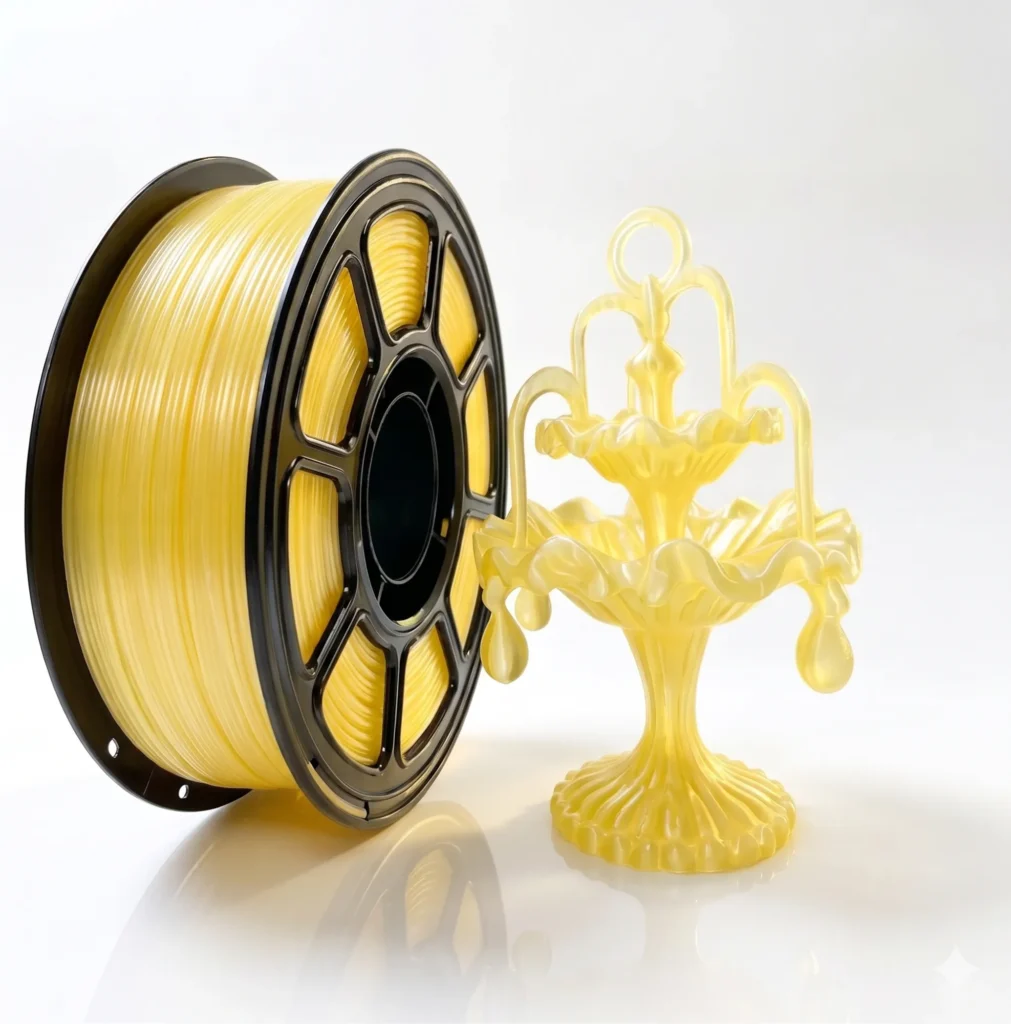
Printing transparent polymers is the secret to stunning liquid aesthetics and custom lighting. Crystal PLA and Transparent PETG are engineered to let light pass through. While 3D printing layer lines naturally refract light (often causing a cloudy, frosted look), you can manipulate your slicer settings to force the plastic into a glass-like state.
- How to Print It: To achieve true transparency, you must eliminate the microscopic air gaps inside the print. Print at a high temperature (220°C+ for Crystal PLA) to keep the plastic fluid, turn your cooling fan off completely, and slow your print speed down to a crawl (20-30 mm/s). The absolute best clarity is achieved using “Vase Mode” (Spiralize Outer Contour), which prints a single, continuous wall with zero infill.
- Common Use Cases: Crystal filaments are the premier choice for custom lamp shades, diffused LED light boxes, sci-fi prop visors, and tabletop RPG spell effects (like ice walls or water elementals).
- Explore DART3D Crystal & Transparent Filaments
4. Silk PLA (Hyper-Glossy Shine)
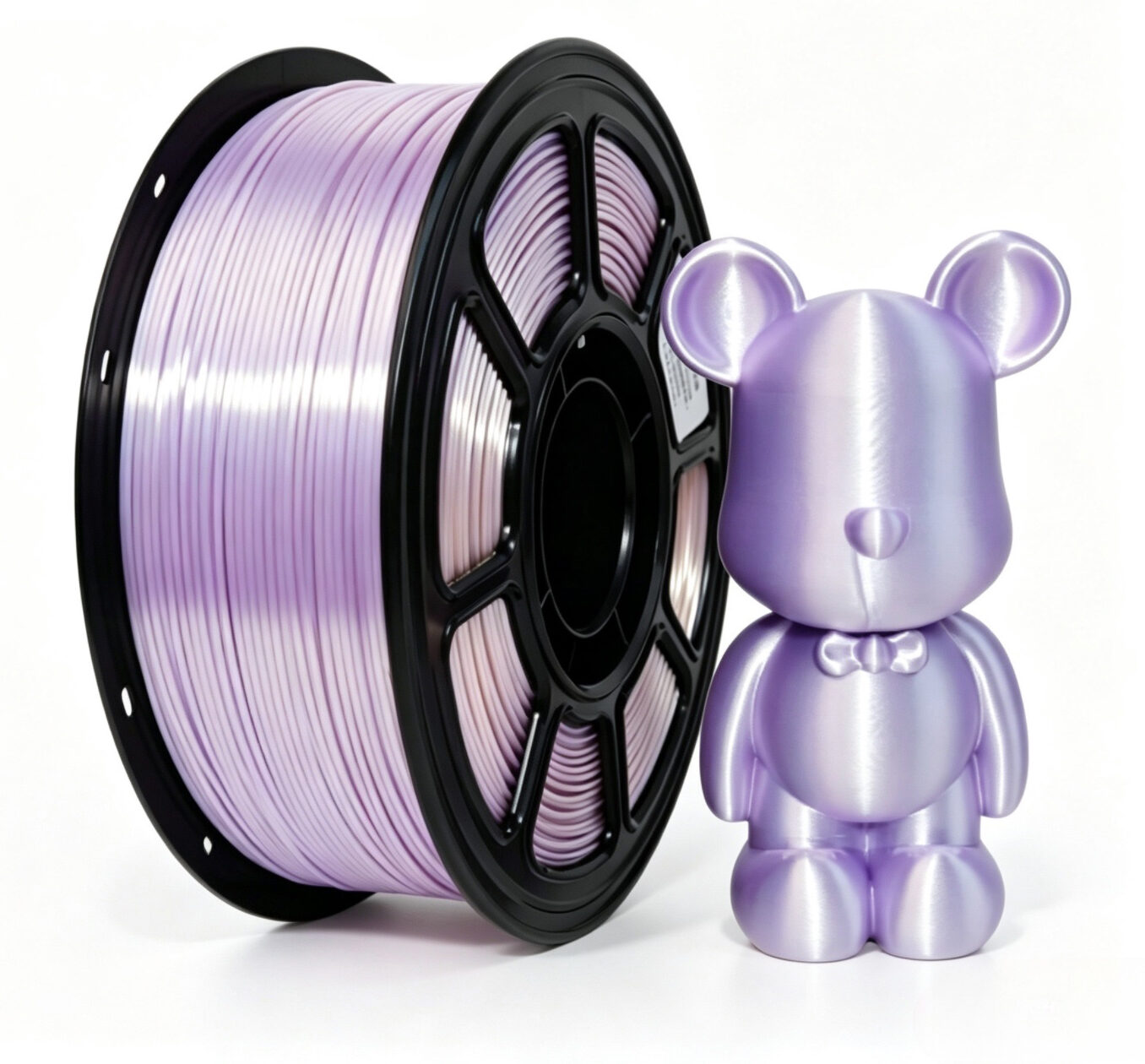
When you want a print to pop without touching a can of spray paint or clear coat, Silk PLA is the answer. Infused with elastomers, Silk PLA yields a hyper-glossy, metallic sheen right off the build plate that standard PLA simply cannot replicate.
- How to Print It: Silk filaments expand slightly when they leave the nozzle, which creates that beautiful shine. To maximize the gloss, print hot (215°C – 220°C) and keep your outer wall speeds slow and incredibly consistent. Any sudden changes in print speed will alter the sheen, leaving dull bands across your otherwise glossy print.
- Common Use Cases: The high-shine finish makes silk the go-to material for decorative vases, busts, cosplay jewelry, and display statues that demand a striking, metallic look (like faux-gold or silver).
- Explore DART3D Silk Filaments
5. Dual-Color PLA (Dynamic Color-Shifting)
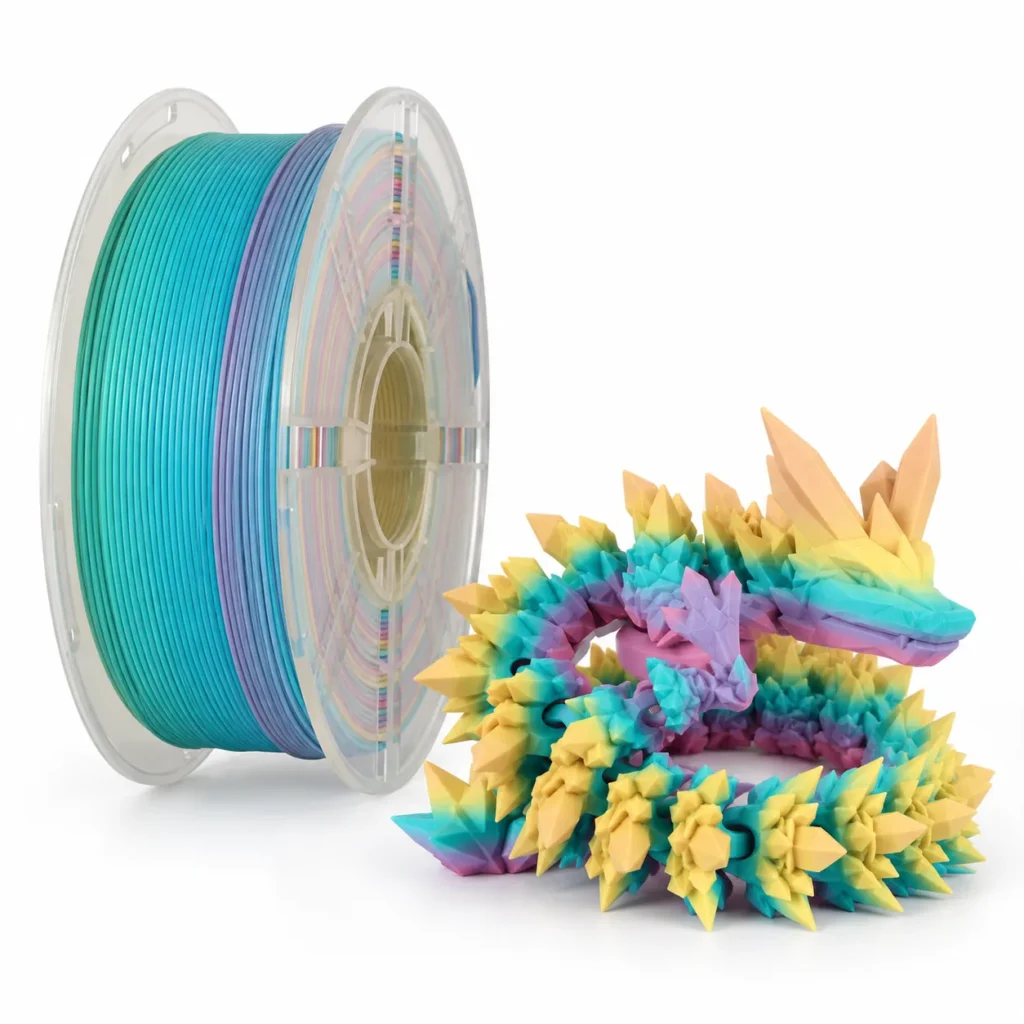
Taking Silk PLA a step further, Dual-Color (Co-extruded) Silk splits the filament strand into two distinct colors straight down the middle. As the printed model rotates, or as the viewer walks past it, the print naturally shifts colors depending on the viewing angle.
- How to Print It: For Dual-Color filaments, orientation is everything. Lock your model’s rotation in the slicer to ensure the color shift happens on the correct axis (e.g., making the front of a statue blue and the back pink). Always align your Z-seam to the back to avoid interrupting the color transition on the face of your model.
- Common Use Cases: These dynamic visual effects make it a massive traffic driver for hobbyists printing articulating toys (like the incredibly popular flexi-dragons), geometric desktop toys, and intricate display pieces.
- Explore DART3D Dual-Color Filaments
6. Glow-in-the-Dark (Photoluminescent Accents)
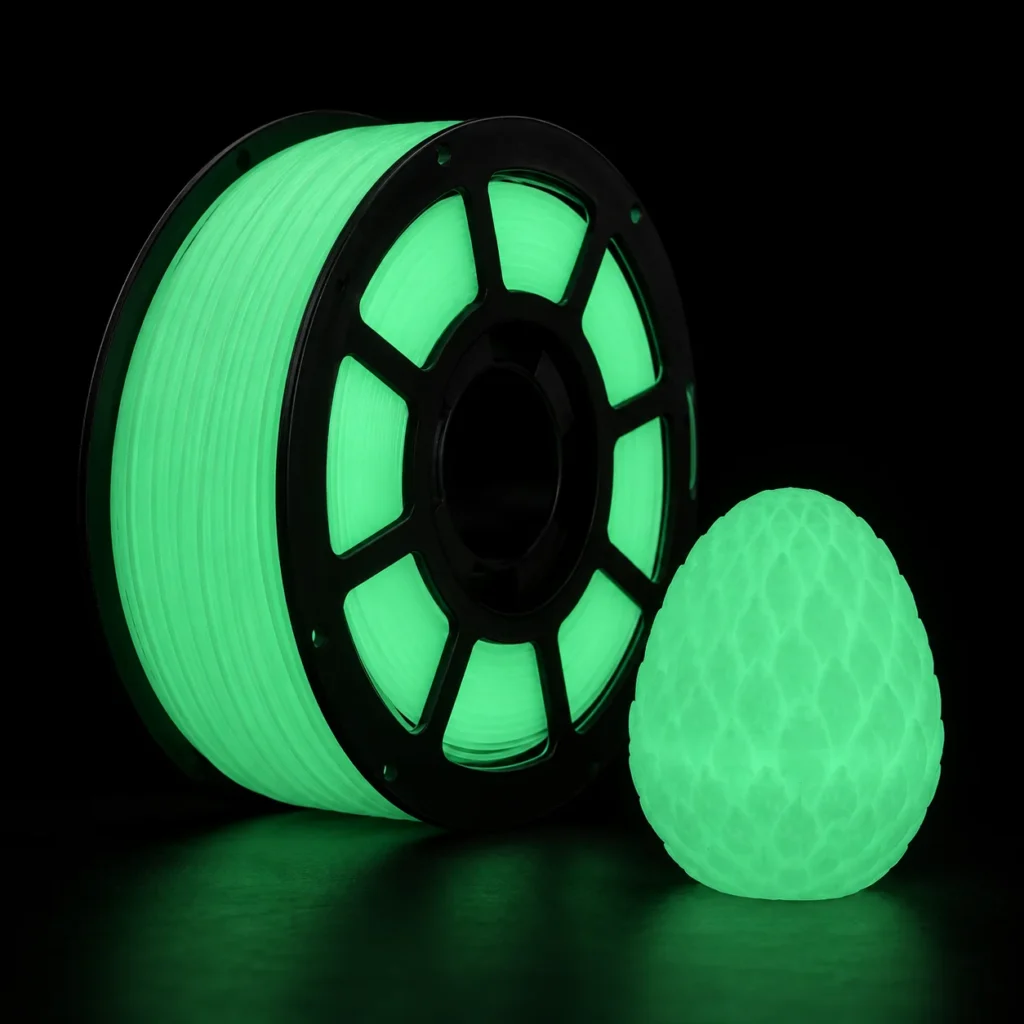
Glow-in-the-dark filament uses photoluminescent additives (usually strontium aluminate) that charge under UV light or standard ambient room lighting. Once the lights go out, the filament emits a strong, neon-like glow in total darkness.
- How to Print It: Warning: Glow powder is incredibly abrasive. It acts like microscopic sandpaper inside your hotend. You must swap your standard brass nozzle for a hardened steel or ruby nozzle, or this filament will destroy your hardware in less than half a spool. For the brightest possible glow, increase your infill density and wall thickness—more plastic inside the model means more photoluminescent material to hold a charge!
- Common Use Cases: Glow filaments are perfect for starry ceiling mounts, Halloween props, customized light switches, and hidden accents on cosplay armor.
- Explore DART3D Glow Filaments
7. Glitter & Starlight (Galaxy Finishes)
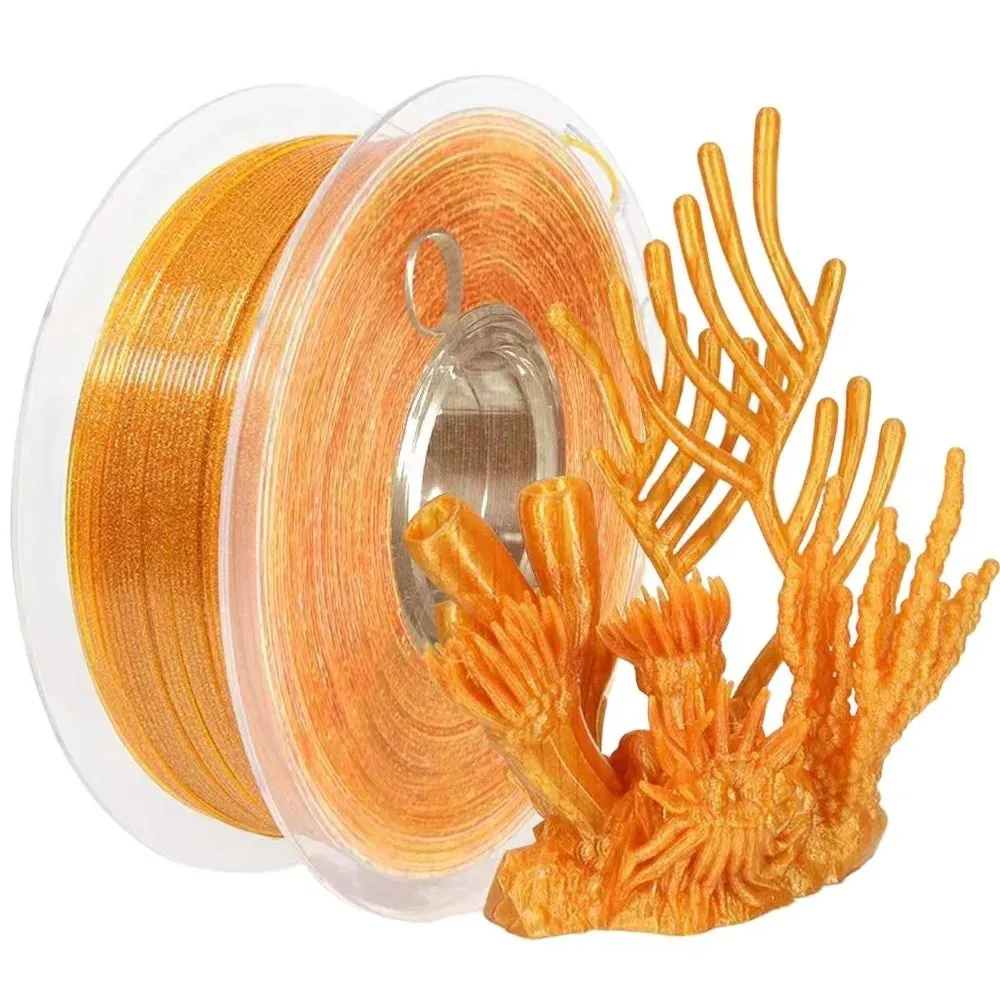
Glitter (often labeled as Starlight or Galaxy) filament is embedded with microscopic reflective flakes. Rather than just shifting color, it actively sparkles under direct light to create a stunning automotive-paint or cosmic aesthetic.
- How to Print It: Similar to glow-in-the-dark, the mica or aluminum flakes in glitter filament are abrasive. A hardened steel nozzle is highly recommended to prevent wear. Additionally, to prevent the flakes from jamming inside the melt zone, bump your nozzle temperature up by 5-10°C and use a minimum nozzle diameter of 0.4mm (0.6mm is even safer).
- Common Use Cases: Because the random scattering of the flakes naturally hides layer lines, this is widely used for “galaxy” themed phone stands, automotive interior mods, striking tabletop terrain, and premium gift boxes.
- Explore DART3D Glitter Filaments
A Note on Material Strength for Effect Filaments
While aesthetics are crucial, functional decor still needs to hold up under pressure. If you are referencing a 3D printer filament strength chart to determine the strongest filament for 3D printing Bambu or Prusa models, remember that additives (like wood fibers or silk elastomers) inherently alter the structural integrity of standard plastics. Silk PLA, for example, is notoriously brittle, while Matte PLA is softer.
If you are printing load-bearing home goods with effect filaments, always ensure your slicer is set to thicker walls (at least 3-4 perimeters) and higher infill densities to compensate for the additives.
Conclusion: Stop Prototyping, Start Making The Final Products
The era of hiding your 3D prints under layers of primer and acrylic paint is over. By leveraging specialized filaments, you can bridge the gap between digital concepts and physical, tactile reality without spending hours in post-processing. Selecting the right effect filament allows you to dictate not just the shape of your object, but its texture, weight, and interaction with light.
Whether you are a hobbyist bringing a tabletop world to life or an industrial designer finalizing a batch of modern home goods, sourcing top-tier materials is the key to elevating your craft.
By building your projects with highly curated, dimensionally accurate materials—like the effect palettes at DART3D—you ensure your prints look and feel like premium manufactured goods the moment they lift off the build plate.
Frequently Asked Questions about Best Effect Filaments
What are the best filaments to use?
The best filament depends entirely on your project’s end goal. For visual models and home decor, DART3D’s effect filaments (Matte, Silk, and Wood) provide the best paint-free aesthetics. For mechanical parts requiring impact resistance, PETG or ABS are superior choices.
Is PLA or PETG better?
PLA is generally better for capturing high-detail aesthetics and is easier to print, making it perfect for intricate decor. PETG is better for functional, outdoor, or mechanical parts because it offers significantly higher thermal resistance and impact strength. DART3D offers premium options for both, depending on your project needs.
What is the highest quality filament?
The highest quality filament is defined by strict dimensional accuracy (usually a +/- 0.02mm tolerance), the use of 100% virgin resin, and rigorous moisture control. Premium suppliers, like DART3D, ensure their materials are meticulously extruded and vacuum-sealed with desiccant to guarantee flawless, clog-free printing every time.
Is PLA or PLA+ better?
PLA+ is universally better for functional parts. It includes impact modifiers and toughening agents that give it superior strength and flexibility compared to standard PLA, while maintaining the same ease of printing you expect from quality DART3D polymers.
Is PLA or PETG better for strength?
According to standard material testing, PETG has vastly superior impact resistance and layer adhesion, making it highly durable under stress. PLA is technically stiffer, but it is much more brittle and will snap under pressure, whereas a quality PETG will flex and absorb the impact.
Can I drink out of a PETG cup?
While raw PETG plastic is generally food-safe, the FDM 3D printing process naturally creates microscopic layer lines where harmful bacteria can easily grow. Even when using premium, clean DART3D filament, we strongly recommend coating any printed cups or bowls with a food-safe epoxy resin before using them for food or drink.
What is PETG not good for?
PETG is prone to stringing and does not bridge gaps as cleanly as PLA. Therefore, it is not ideal for printing tiny, highly detailed tabletop miniatures, complex organic shapes, or models with extreme, unsupported overhangs. For those projects, a specialized DART3D PLA is a much better choice.
Will PETG melt in the sun?
No, PETG has a relatively high glass transition temperature (around 80°C). Unlike standard PLA, which will warp and deform if left in a hot car or direct summer sunlight, PETG is highly UV resistant and thermally stable, making it an excellent choice for outdoor functional prints.
Is PETG more fragile than PLA?
No, PETG is actually much less fragile than PLA. Its inherent flexibility allows it to absorb sudden impacts and bend before breaking. When printed with consistent, high-quality materials like DART3D PETG, it is one of the strongest choices for functional parts printed on high-speed enclosed systems.
Can I make a 3D print translucent like glass?
Yes, achieving a glass-like translucency is possible by meticulously controlling your slicer parameters to prevent light refraction. By utilizing a completely dry, premium transparent DART3D filament, printing at high temperatures, and employing a single continuous wall (Vase Mode), the structural gaps that cause cloudiness are eliminated, resulting in a stunning glass-like aesthetic.
