Freeshipping for over $70 purchase

On this page
Key takeawaysWhat to Expect from Wood PLA FilamentIs PLA Wood Good for Functional Parts?Finding the Best Wood PLA on the MarketThe Truth from Every Wood PLA Review Reddit ThreadCommon Mistakes When Printing Wood FilamentConclusionFrequently Asked Questions about Wood PLAShop the filamentsKey takeaways
A true wood PLA review reveals that this material is fantastic for decorative items like statues and vases because it looks, feels, and mimics the texture of real timber. However, because it contains real wood dust mixed with plastic, it is more brittle than standard filament and requires a larger nozzle to prevent clogs. If you want retail-ready rustic decor without learning traditional woodworking, wood PLA is a highly practical choice.
If you are a home decor enthusiast, you likely want pieces that look natural, warm, and authentic. The problem with standard 3D printing is that normal brown filament just looks like cheap, shiny plastic.
You do not want your custom living room decor to look like a plastic toy. You want it to look like it was hand-carved by a professional carpenter.
This is where wood infused filament comes in. But before you spend your money on a new spool of material, you need to know exactly how it behaves. Here is a straightforward, honest look at what you can expect when printing with wood filament.
What to Expect from Wood PLA Filament
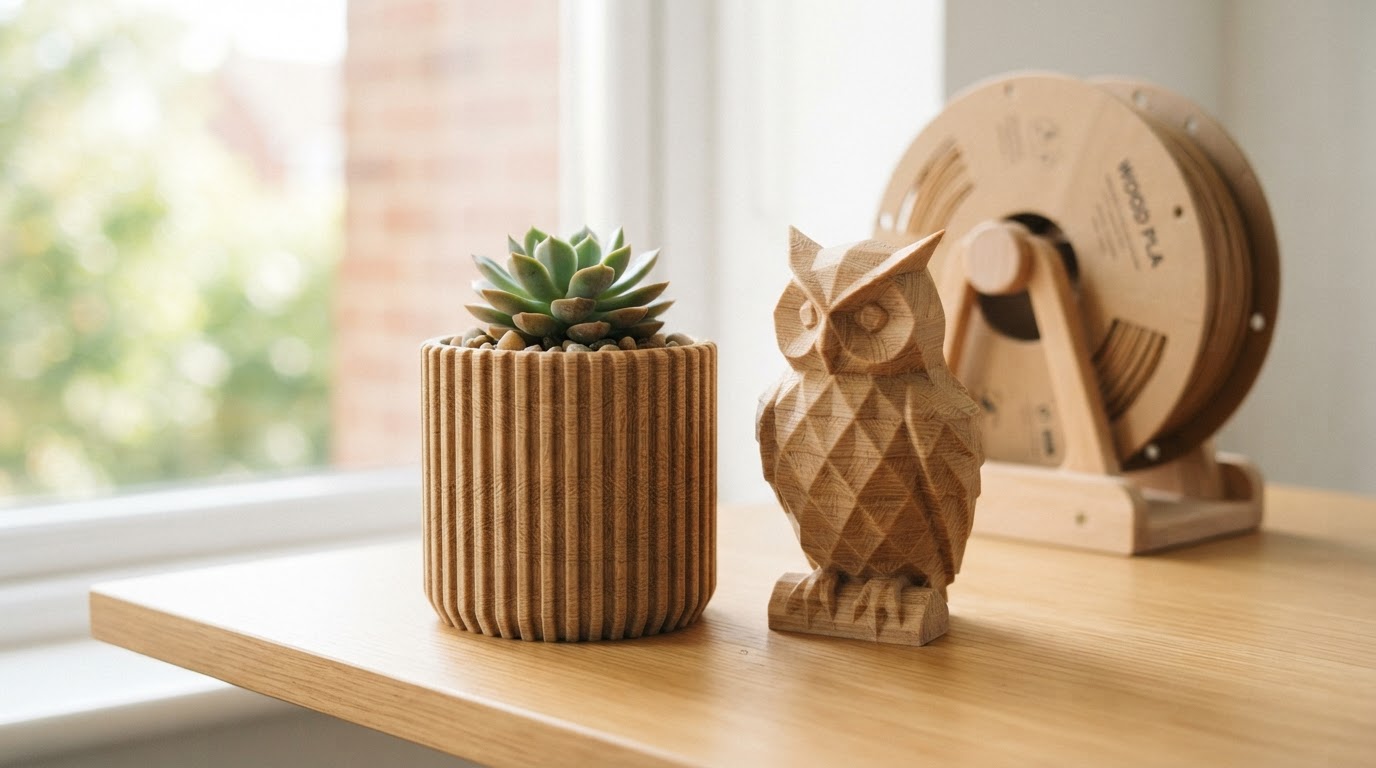
When you open a spool of wood PLA filament, the first thing you will notice is the smell. It actually smells like a lumber yard or a sweet campfire.
This happens because the filament is not just colored plastic. It is a unique mixture of standard PLA plastic and real, recycled sawdust.
- Think of wood PLA filament like a smoothie made with real fruit versus fruit-flavored syrup. Standard brown PLA is just plastic colored with artificial dye, like a fake syrup. Real wood PLA actually has tiny grains of real wood blended right into the plastic, giving it a true, gritty texture.
Because of this real wood content, it prints with a gorgeous matte finish that hides layer lines perfectly.
This makes it the absolute best material for printing a ribbed modern planter, a highly detailed faux-oak desk organizer, or a vintage-style jewelry box.
Is PLA Wood Good for Functional Parts?
A common question makers ask is whether this material can be used for structural household items. The short answer is no.
While it looks beautiful, adding wood dust to plastic completely changes how strong the material is.
- Think of the strength of wood PLA like a graham cracker compared to a hard piece of candy. Normal PLA is tough, rigid, and hard to break, just like a solid piece of hard candy. Because wood PLA replaces a lot of that strong plastic with soft sawdust, the final print becomes crumbly and brittle, snapping much easier under pressure, just like a graham cracker.
You should never use wood filament for load-bearing items like shelf brackets, heavy coat hooks, or mechanical gears.
Instead, save this beautiful material for aesthetic pieces like a rustic wall clock frame or a custom picture frame. If you do need to build larger, multi-part wooden items, you will need to learn about [Internal Link: Designing Functional Joints for 3D Printing Woodworking] to ensure your pieces fit together without snapping.
Finding the Best Wood PLA on the Market
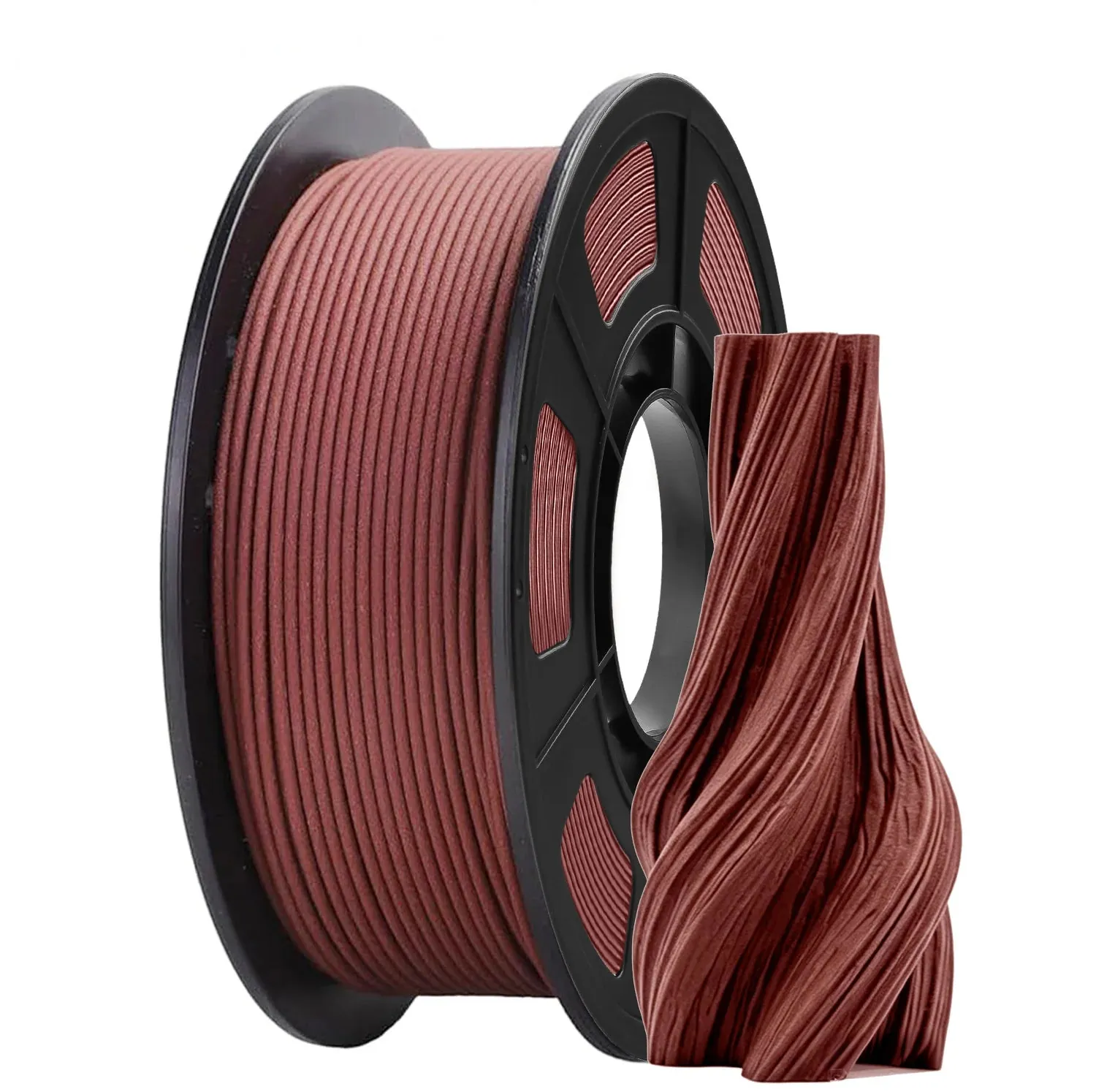
Not all wood filaments are created equal. The biggest issue you will face with low-quality brands is constant printer jams.
If the wood particles inside the plastic are too large or uneven, they will get stuck in your printer’s hot nozzle, ruining your print halfway through.
- Think of your 3D printer nozzle like a drinking straw, and cheap wood filament like a chunky milkshake. If the ice chunks in a milkshake are too big, they will instantly jam the tiny opening of the straw. High-quality wood filament uses finely filtered wood dust that flows smoothly, just like a perfectly blended milkshake.
This is why experienced makers rely on DART3D’s premium effect filaments as the benchmark for high-quality, dry materials. Their wood lines use micro-fine wood particles that reduce the chance of jams.
Even with great filament, it is highly recommended to upgrade your hardware. Always pair your material with the [Internal Link: Best Nozzle Sizes to Prevent Clogging for wood infused pla] to guarantee a smooth, flawless extrusion.
The Truth from Every Wood PLA Review Reddit Thread
If you read any wood PLA review reddit thread, you will quickly notice a common theme among veteran 3D printers. The community consensus is that wood PLA looks okay right off the printer, but it looks incredible after post-processing.
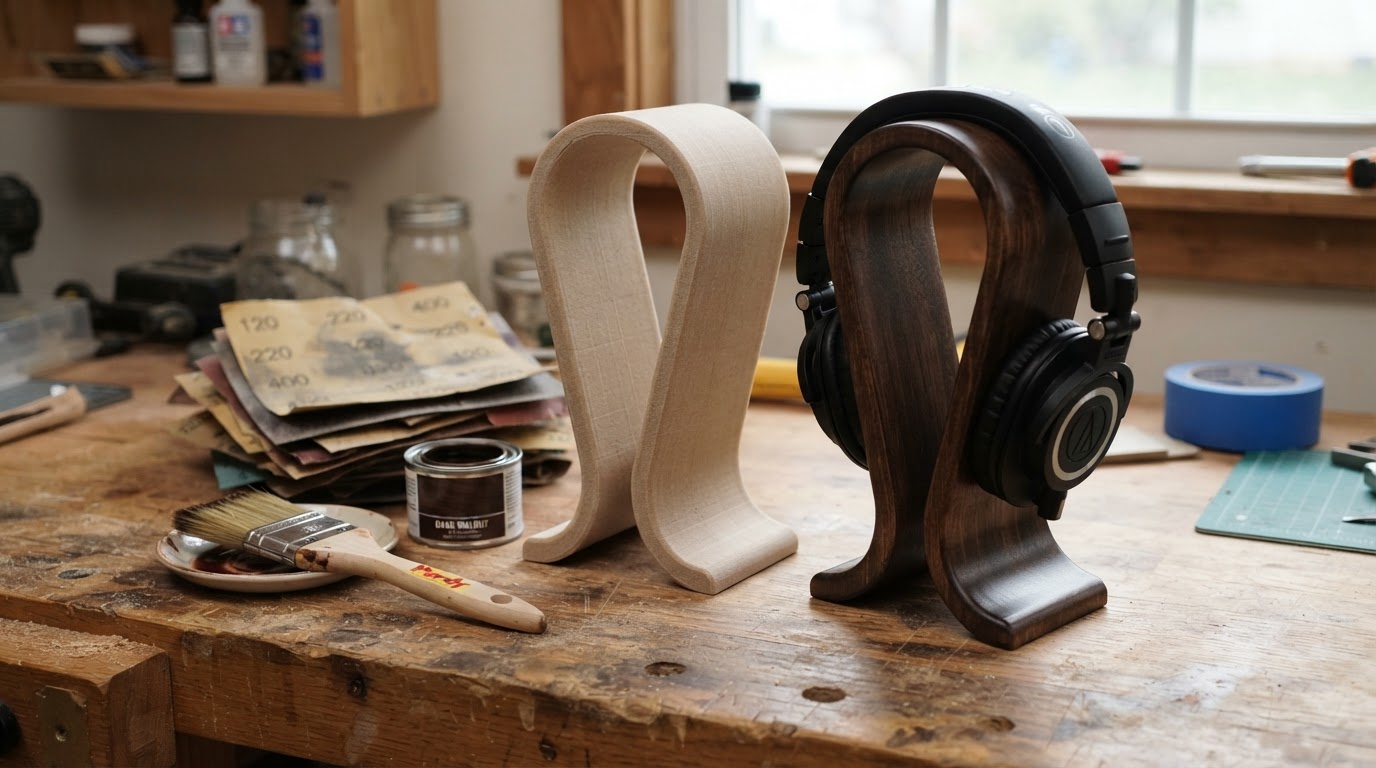
A raw wood print has a texture similar to dense cardboard. It is matte and light brown, but it lacks the rich, dark tones of expensive furniture.
To get that premium, retail-ready look, you have to treat it like real lumber. You can sand it, stain it, and paint it just like a piece of wood from the hardware store.
By taking a printed rustic wine bottle holder and applying a dark walnut gel stain, you can fool anyone into thinking it was carved by hand.
To achieve this high-end look without ruining your print, be sure to follow a step-by-step guide on [Internal Link: How to get the best wood PLA finishing].
Common Mistakes When Printing Wood Filament
To get the most out of your best wood PLA, you need to avoid a few beginner traps. Because this material is unique, your standard printing profiles might need a few tweaks.
Here are the most practical tips for a successful wood print:
- Turn down your retraction settings: Retraction pulls the filament backward to stop stringing. Because wood PLA is brittle, pulling it back and forth too quickly can snap the filament inside your gears.
- Do not leave it heated while paused: Real wood burns. If you pause your printer and leave the nozzle hot, the wood fibers inside the nozzle will scorch, turn black, and cause a permanent clog.
- Use thick layer lines: Do not try to print perfectly smooth layers. Printing with thick 0.28mm layer lines actually mimics the natural grain of a tree, giving your final print a highly realistic texture.
Conclusion
Printing with wood filament is one of the most rewarding upgrades you can make to your 3D printing hobby. It allows you to step away from shiny plastic toys and start creating stunning, realistic home decor that looks like it belongs in a premium furniture catalog.
While it requires a slightly larger nozzle and a gentle touch, the ability to sand and stain your prints makes it incredibly valuable. When you are ready to start creating flawless rustic designs, trust DART3D to provide the highest quality, perfectly blended wood filaments for a jam-free experience every time.
Frequently Asked Questions about Wood PLA
Is wood PLA stronger than normal PLA?
No, wood PLA is noticeably weaker and more brittle than normal PLA. Because a large percentage of the durable plastic is replaced with soft wood dust, the material loses a lot of its strength. It should only be used for decorative and aesthetic models, not for load-bearing or mechanical parts.
Is there PLA that looks like wood?
Yes, wood-infused PLA is specifically manufactured to look, feel, and smell like real wood. It provides a beautiful, textured matte finish that easily hides 3D printed layer lines. For the most realistic look, you can even sand and apply real wood stain to the final print.
Does Wood PLA actually have wood in it?
Yes, true wood PLA contains real, recycled wood dust or bamboo fibers mixed directly into the plastic. The mixture is typically around 70% PLA plastic and 30% fine wood powder. This real wood content is what allows the filament to absorb wood stains and give off a campfire smell while printing.
Is PLA wood good?
PLA wood is excellent if your goal is to create beautiful, realistic home decor, props, and art pieces without any plastic shine. It is highly valued for its ability to be sanded and stained. However, it is not a good choice if you need to print strong, durable, or flexible tools.
What type of PLA is the strongest?
If you need maximum strength, PLA+ (or PLA Pro) is heavily modified with additives to be much tougher and more impact-resistant than standard PLA. For even more extreme strength, many makers turn to Polycarbonate (PC) or Carbon-Fiber blended PLAs, which are designed specifically for heavy mechanical use.