Freeshipping for over $70 purchase

On this page
Key takeawaysWhy Combining 3D Printing and Woodworking Saves MoneyDesigning 3D Printing Woodworking Projects: Clearances MatterFinding the Right 3D Models for WoodworkingChoosing the Right Filament for the JobSimulating a 3D Printer for Wood CarvingEssential 3D Printed Woodworking Tools Free to DownloadChoosing the Best 3D Printer for WoodworkingConclusionFrequently Asked QuestionsShop the filamentsKey takeaways
To master 3d printing woodworking, you must design your plastic joints with a 0.2mm to 0.4mm clearance gap so they fit perfectly into real wood. You can print structural connectors like hidden dowels using strong materials, or print beautiful, decorative bowtie inlays using wood filament. By downloading 3D models for woodworking, you can easily create perfect jigs, corner clamps, and custom brackets without needing expensive power tools.
Building custom furniture or home decor is incredibly satisfying, but cutting perfect joints is very difficult. One tiny mistake with a hand saw can ruin an expensive piece of walnut or oak.
Instead of buying expensive tools to cut complex dovetails, you can let your 3D printer do the heavy lifting. By combining 3d printing and woodworking, you can design flawless joints, brackets, and jigs right on your computer.
You do not need to be a master carpenter to create retail-ready home decor. With the right materials and a few simple measurements, your printer can bridge the gap between digital design and real-world craftsmanship.
Why Combining 3D Printing and Woodworking Saves Money
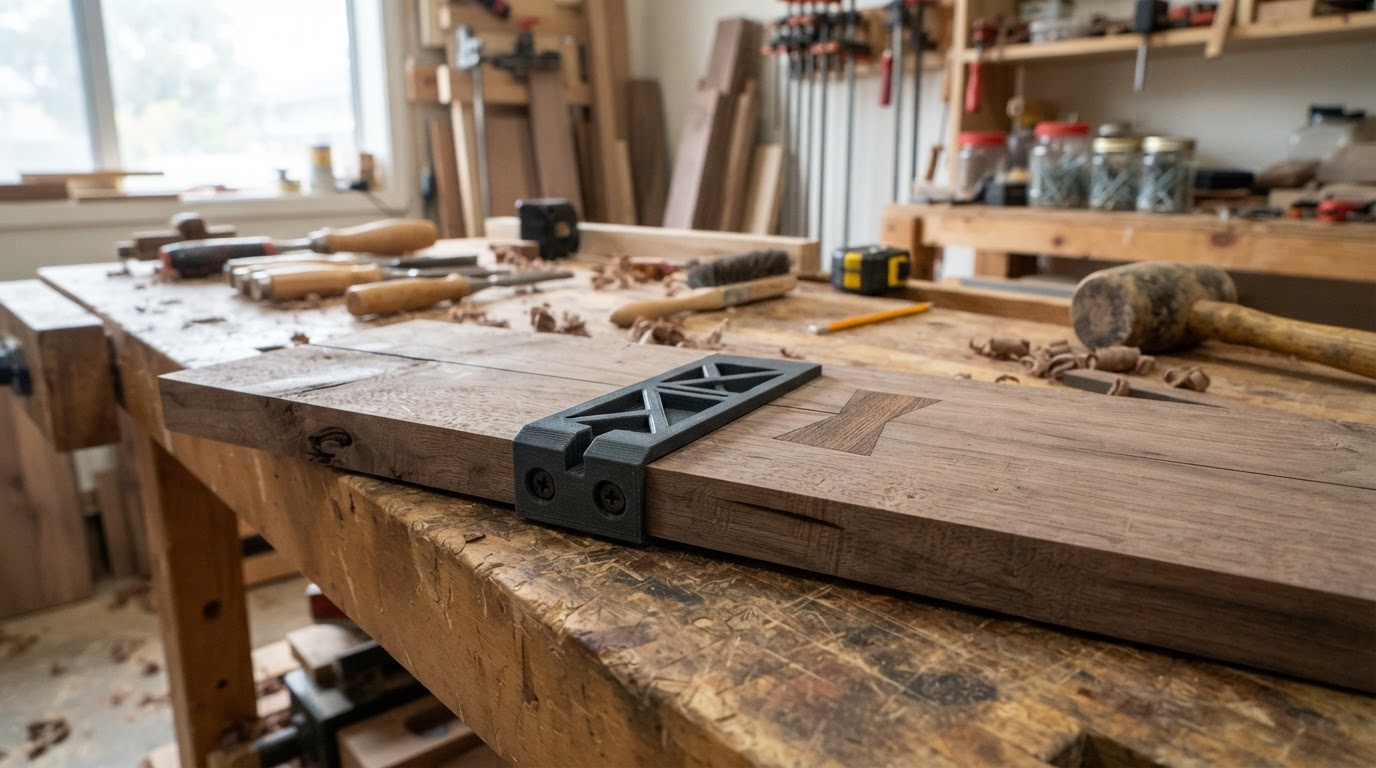
Traditional woodworking requires a massive amount of expensive gear. You typically need routers, table saws, chisels, and a massive workbench just to get started.
If you want to make a seamless corner for a custom jewelry box, doing it by hand takes years of frustrating practice. Your 3D printer solves this problem by printing perfect corner brackets and hidden joints every single time.
- Think of a 3D printer like a perfectly steady robot hand, while traditional woodworking relies on a shaky human hand. The robot hand will cut the exact same perfect puzzle piece a thousand times in a row without ever getting tired.
Designing 3D Printing Woodworking Projects: Clearances Matter
When you start designing 3d printing woodworking projects, the most important rule is understanding “clearance.” Clearance is the intentional empty space left between two objects so they can fit together.
Real wood expands and shrinks with changes in room humidity, while plastic stays exactly the same size. If you print a plastic joint that is the exact same size as your wooden hole, it will absolutely not fit.
You must intentionally design your 3D models to be slightly smaller than the hole in the wood, usually by about 0.2mm to 0.4mm.
- Think of clearance like wearing thick wool winter socks inside your everyday sneakers. If your shoes are already a tight fit, adding thick socks makes it impossible to put them on. You need that tiny bit of extra breathing room to slide the pieces together smoothly.
💡 Pro Tip: Before you start designing structural parts, remember that not all materials are meant for heavy lifting. Check out our Honest Wood PLA Review: What to Know Before Purchasing to understand which filaments are safe for tight-fitting joints.
Finding the Right 3D Models for Woodworking
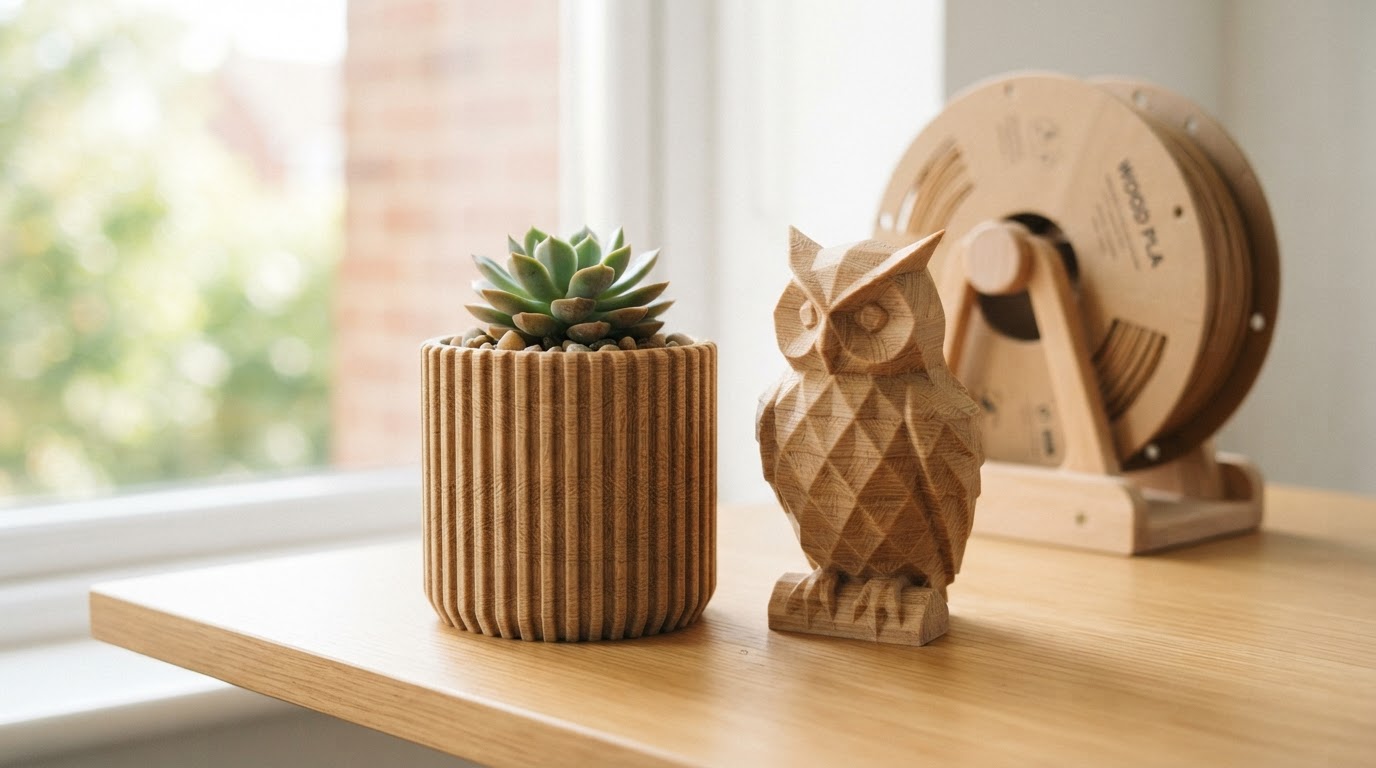
You do not have to be an expert in 3D design software like SolidWorks or Tinkercad to get started today. There are thousands of pre-made 3d models for woodworking available online for free.
You can easily download ready-to-print corner clamps, routing templates, and dowel pins. Once downloaded, you can drop them into your slicer software and scale the size up or down to fit your specific wooden boards.
Always use a cheap pair of digital calipers to measure the exact thickness of your real wood before you press print. Measuring accurately prevents you from wasting time printing a joint that is too wide or too narrow.
Choosing the Right Filament for the Job
When connecting two heavy pieces of wood, like the legs of a coffee table, you need a strong plastic like PETG or PLA+. However, if you are making decorative joints that sit on the outside of your project, wood filament is the best choice.
A popular aesthetic project is printing a “bowtie inlay” to connect two split pieces of a rustic wooden tabletop. For these visual pieces, DART3D’s premium effect filaments set the perfect standard for authentic, textured finishes.
By using high-quality material from DART3D, your printed bowtie joint will look like it naturally belongs in the wood. It completely removes the cheap, shiny plastic look that ruins aesthetic home decor.
💡 Pro Tip: To make sure your printed joints blend in perfectly with your real wood grain, follow our step-by-step guide on How to Get the Best Wood PLA Finishing.
Simulating a 3D Printer for Wood Carving
While a standard desktop printer cannot physically cut or carve real wood boards, it can simulate the look perfectly. Using a 3d printer for wood carving effects means printing a highly detailed, textured plastic relief and embedding it into your wooden furniture.
Instead of spending days hand-carving a floral design into a wooden cabinet door, you can simply 3D print an ornate decorative panel. You can then glue that printed piece directly onto the flat wood.
If you use a textured wood filament, sand it gently, and stain it to match the cabinet door, nobody will know it is plastic. It is the ultimate shortcut for creating vintage, heavily detailed home decor.
Essential 3D Printed Woodworking Tools Free to Download
One of the best ways to improve your woodshop is by printing your own 3d printed woodworking tools. You can print highly accurate items like center finders, sanding blocks, and drill guides for pennies on the dollar.
These custom tools help you make perfectly straight cuts and perfectly centered holes in your real wood.
- Think of 3D printed jigs like tracing paper for a drawing. Just like tracing paper guarantees you stay perfectly inside the lines when sketching, a 3D printed drill guide guarantees your drill bit stays perfectly straight when cutting into expensive wood.
When you search for 3d printed woodworking tools free on sites like MakerWorld, you will find endless practical upgrades. Just be careful when using wood filament to print your tools.
Because these 3d printed craft tools need to be highly precise, you must avoid nasty hotend clogs by using the correct printer hardware.
💡 Pro Tip: If you decide to print your shop tools out of textured materials, be sure to use the Best Nozzle Sizes to Prevent Clogging for Wood Infused PLA.
Choosing the Best 3D Printer for Woodworking
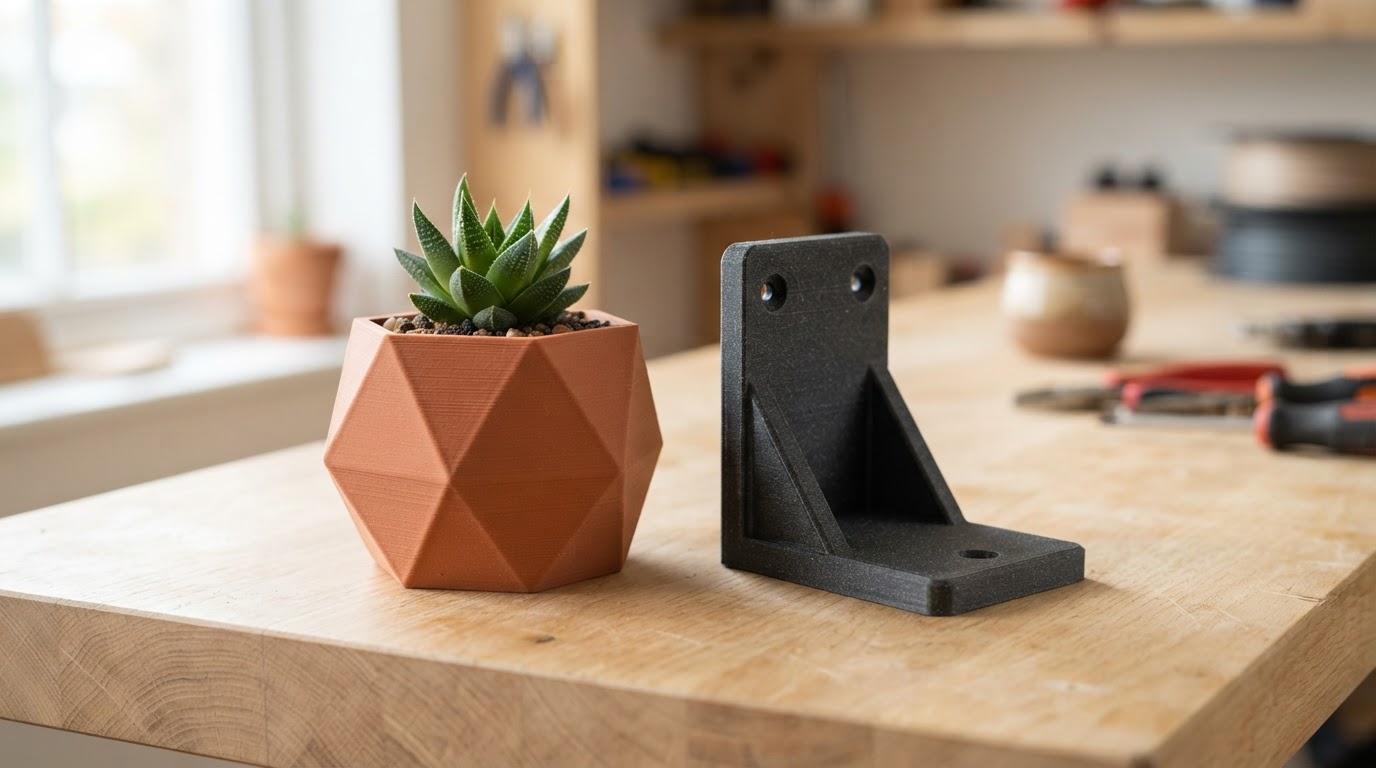
The best 3d printer for woodworking is simply one that offers reliable dimensional accuracy. You do not need a massive, expensive machine to print brackets.
You just need a printer that prints straight lines exactly as they are designed on the computer. Printers with automatic bed leveling and rigid metal frames are ideal because they ensure your plastic joints come out perfectly flat every time.
Conclusion
Adding a 3D printer to your woodshop opens up a massive world of creative possibilities. You no longer have to struggle with complex hand tools to create beautiful, tight-fitting joints for your custom home decor.
By focusing on proper clearances and downloading the right jigs, you can build professional-level furniture in a fraction of the time. When you are ready to create stunning decorative inlays and realistic faux-wood pieces, always trust DART3D for the most reliable materials on the market.
Frequently Asked Questions
What are the best 3D printed woodworking tools to make?
The most useful tools to print are corner clamps, center finders, drill guides, and custom sanding blocks. These 3D printed woodworking tools cost almost nothing to print in plastic but perform just as well as expensive store-bought versions. You can easily find free files for these online to immediately upgrade your workflow.
Can I use a 3D printer for wood carving projects?
A standard 3D printer cannot actually cut or carve real wood boards. However, you can simulate a 3D printer for wood carving by printing highly detailed medallions, floral panels, or bowtie inlays out of wood filament. You can then glue these printed pieces directly to flat wooden boards to create a realistic hand-carved look.
Where can I find 3D models for woodworking?
You can find thousands of free 3D models for woodworking on popular community websites like MakerWorld, Printables, and Thingiverse. Simply search for “woodworking jigs” or “wood joinery” to find pre-made templates, brackets, and measuring tools. Most of these files are ready to download and print immediately.
How do I start combining 3D printing and woodworking?
The easiest way to start combining 3D printing and woodworking is by printing simple corner brackets for picture frames or drawer organizers. As you get more comfortable, you can start designing structural joints, making sure you always leave a 0.2mm gap for a perfect fit. Always use strong plastics like PETG for hidden structural joints, and save wood filaments for the decorative exterior parts.