Freeshipping for over $70 purchase

On this page
Key takeawaysWhy 3D Printed Lamp Shades are the Ultimate Decor HackShop this filamentThe Magic of Transparent Filament LightingUnderstanding Light Refraction in 3D PrintsHow to Master Your 3D Lamp Shape and Slicer SettingsBe Careful With OverhangsPopular Projects: IKEA Hacks and LithophanesThe 3d Printed Lamp Shades IKEA HackThe 3D Printed Lamp Shade With Picture (Lithophanes)Where to Find 3D Printed Lamp Shades Free DownloadsConclusionFrequently Asked QuestionsShop the filamentsKey takeaways
To design high-quality 3d printed lamp shades, you should always use low-heat LED bulbs to prevent melting, choose transparent or effect filaments for beautiful light diffusion, and print using “vase mode” for seamless, paint-free finishes. Websites like MakerWorld and Thingiverse offer thousands of free 3D lamp shapes that fit standard IKEA fixtures right out of the box.
Are you tired of 3D prints that look like cheap, plastic toys? If you want to create stunning home decor that looks like you bought it from a high-end furniture store, lighting is the perfect place to start.
The days of messy sanding, toxic spray paints, and endless post-processing are over. Today, you can create a retail-ready printed lamp right on your print bed.
With the right materials and a few simple slicer settings, you can design custom lighting that instantly upgrades your living room or bedroom. Let’s dive into how you can master the art of 3D printed lighting.
Why 3D Printed Lamp Shades are the Ultimate Decor Hack
Creating a 3d print light shade is one of the most rewarding projects for any maker. Instead of just printing another basic toy, you are crafting a functional piece of art.
The best part? You do not have to sand or paint anything. By choosing the right filament, you let the 3D printer do all the hard work for you.
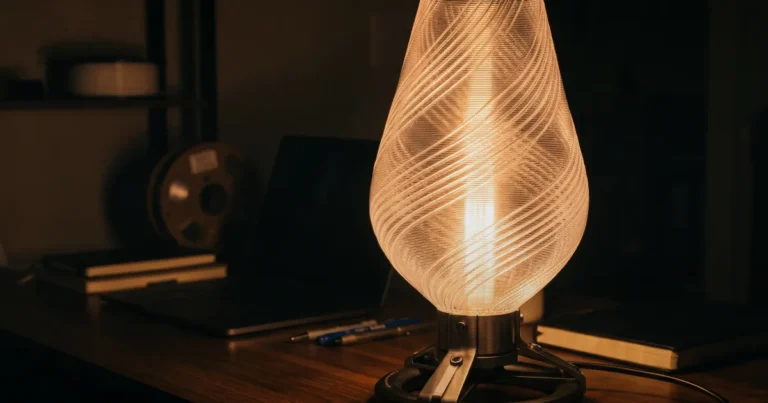
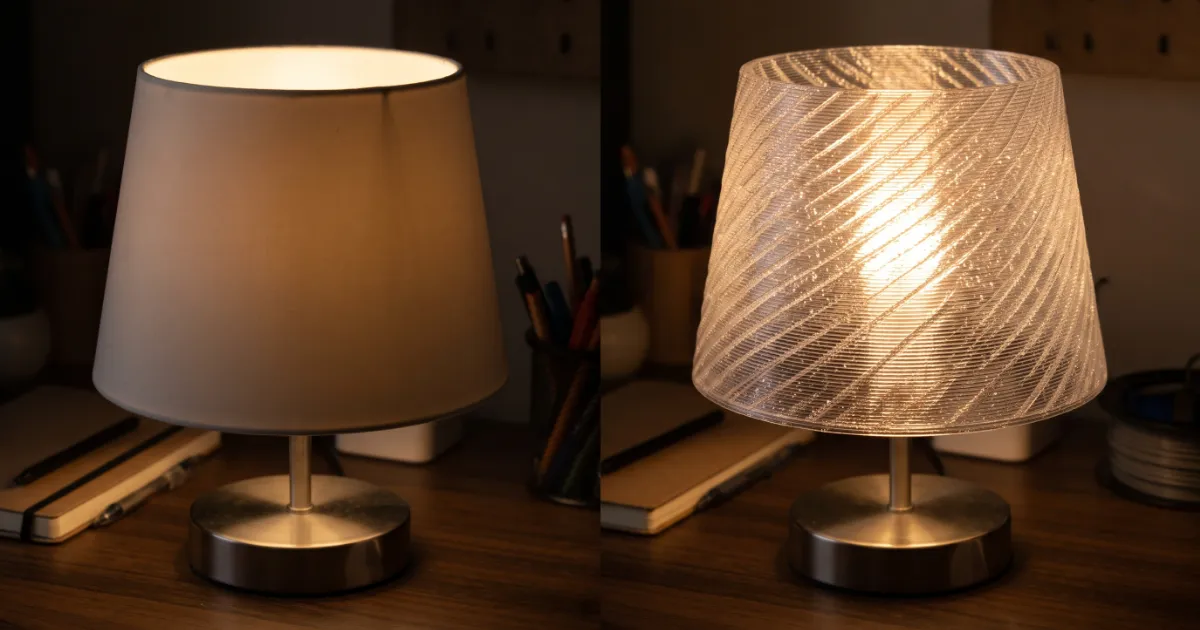
When you print a piece like a ribbed modern desk lamp, the natural texture of the 3D printing process actually makes the final product look better.
- Think of layer lines like a soft-serve ice cream machine. Just as the machine neatly stacks swirls of ice cream on top of each other to create a beautiful cone, your 3D printer stacks layers of plastic. When used properly on a lamp shade, these stacked layers create a gorgeous, modern ribbed texture that diffuses light perfectly.
The Magic of Transparent Filament Lighting
When it comes to creating a 3d lamp shape, the material you choose is everything. Standard opaque plastic will block the light completely.
To get that warm, glowing aesthetic, you need to use clear or translucent materials. This is the secret to perfect transparent filament lighting.
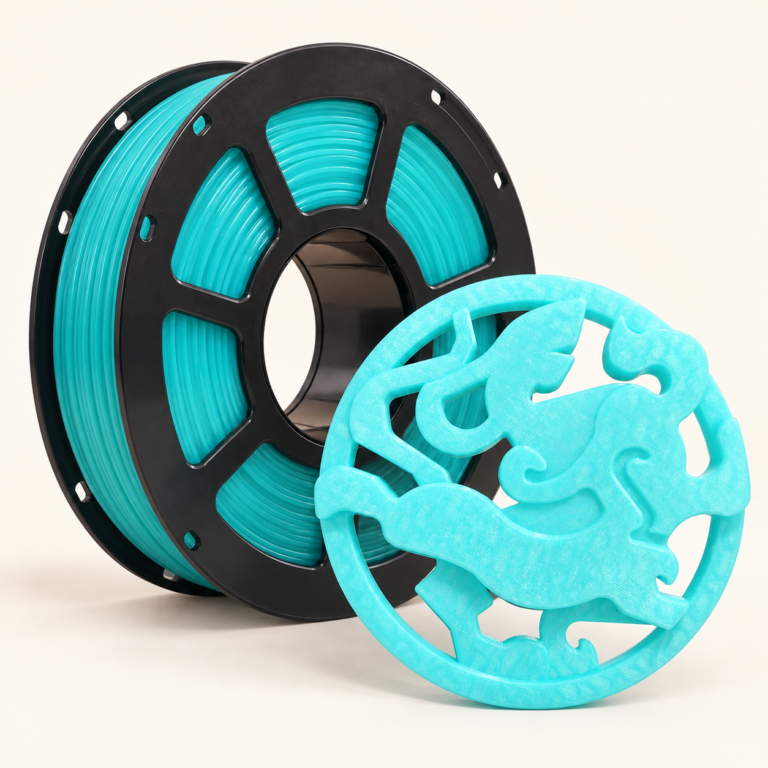
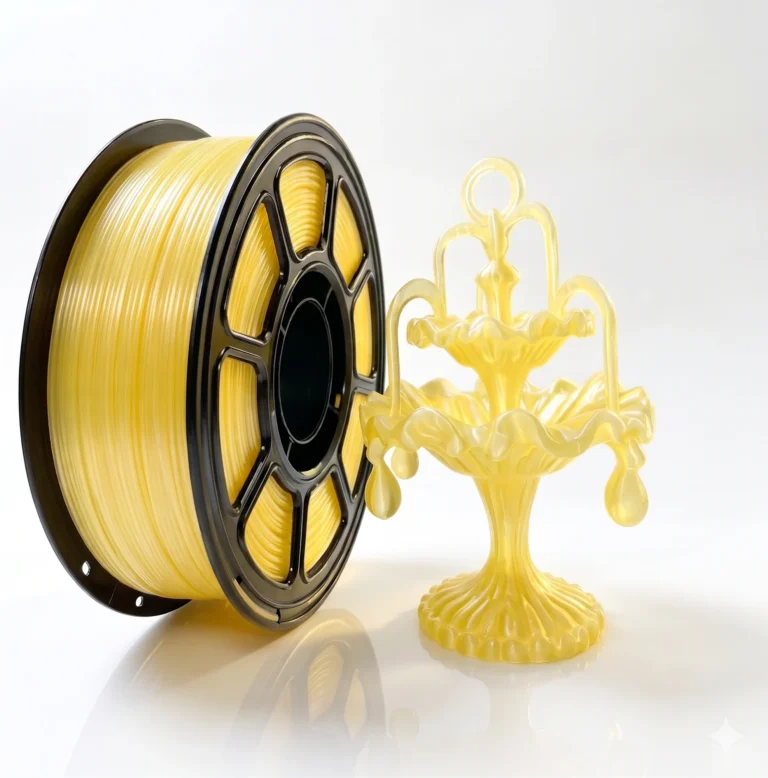
Using high-quality materials ensures your print comes out looking like real frosted glass or crystal. This is exactly where DART3D’s premium effect filaments set the benchmark for high-quality, dry materials that print beautifully every time.
💡 Pro Tip: To achieve a flawless glass-like glow, we highly recommend using DART3D’s premium effect filaments to ensure your lighting looks professional and retail-ready.
Understanding Light Refraction in 3D Prints
When light hits a 3D print, it bounces around inside the plastic. If you print with thick walls and dense infill, the light gets trapped.
- Think of light refraction in a 3D print like sunshine hitting a frosted bathroom window. A perfectly clear glass window lets you see everything outside, but a frosted window scatters the sunlight, creating a soft, glowing blur. When you print a lamp shade with transparent filament, the plastic layers act just like that frosted window, softening the harsh bulb into a warm, cozy glow.
How to Master Your 3D Lamp Shape and Slicer Settings
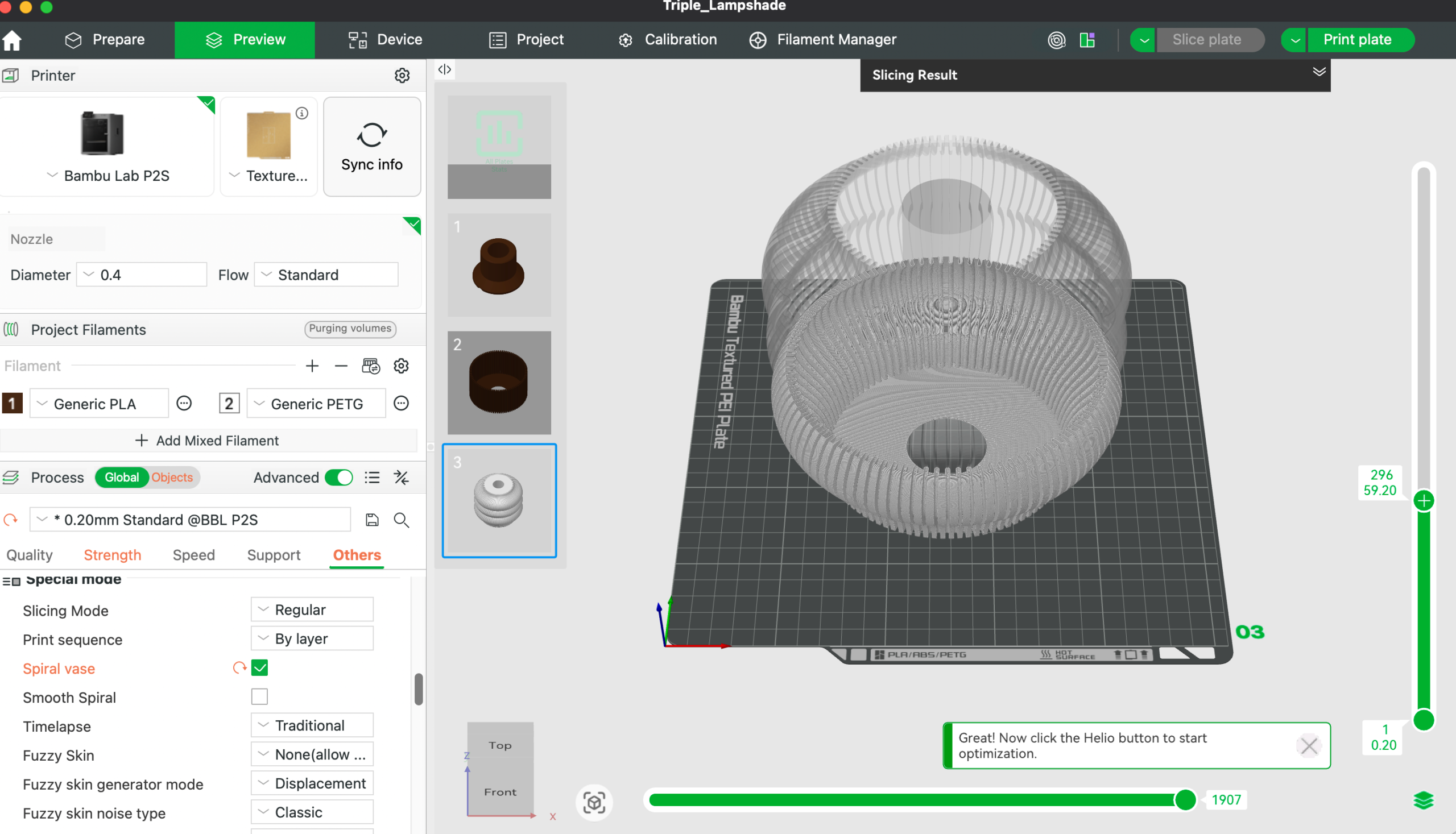
To make your 3d lamp shades look professional, you need to use the right settings in your slicing software. The most important tool in your software is called “Vase Mode” (or “Spiralize Outer Contour”).
Vase mode tells your printer to print the entire lamp shade as one single, continuous wall. It moves in a smooth spiral from the bottom to the top. This removes ugly seam lines and makes the shade perfectly translucent.
💡 Pro Tip: Because vase mode requires a perfectly smooth, non-stop flow of plastic, it is crucial to use a high-quality, moisture-free material like DART3D’s crystal effect filament line.
Be Careful With Overhangs
When designing your own shade, pay close attention to the angles of your design. 3D printers cannot print plastic in mid-air.
- Think of overhangs like building a bridge without any support beams underneath it. If you try to build a road straight across a canyon with nothing holding it up, the road will collapse. Similarly, if your lamp shade curves outward too sharply, the hot plastic will droop and fall. Always keep the walls of your lamp shade at a smooth, gradual angle so the layers have something to rest on.
Popular Projects: IKEA Hacks and Lithophanes
You do not have to be an electrician to build a working lamp. One of the easiest tricks is to design a 3d printed lamp shade frame that snaps right onto existing, store-bought lighting hardware.
The 3d Printed Lamp Shades IKEA Hack
IKEA sells very cheap, basic light cords and bases (like the IKEA SEKOND or STRÅLA). These are fully wired and safe to plug into the wall.
Makers love designing custom shades that perfectly fit the plastic rings on these IKEA cords. You can easily find files online that turn a $5 IKEA wire into a $100-looking geometric lotus pendant light.

The 3D Printed Lamp Shade With Picture (Lithophanes)
Want to make a highly personal gift? Try printing a lithophane. A lithophane is a 3D print that looks like a bumpy, white piece of plastic when turned off.
However, when you put a lightbulb behind it, the thick parts block the light, and the thin parts let light through. This magically reveals a highly detailed black-and-white photograph! Creating a 3d printed lamp shade with picture details is incredibly popular for bedside lamps and memorial gifts.
Where to Find 3D Printed Lamp Shades Free Downloads
If you do not want to design your own shape from scratch, the internet is full of free, ready-to-print files. You can find thousands of professional designs with a simple search.
- MakerWorld: This site is amazing for finding a 3d printed lamp shade makerworld file. It usually includes pre-tested print profiles, meaning you just click “print” and the settings are already perfectly configured for you.
- Thingiverse: Searching for a 3d printed lamp shade thingiverse file will give you thousands of classic results, from modern geometric domes to cute, character-themed nightlights.
- Printables: Another excellent resource for finding a lamp shade 3d model free download. Look for models that are specifically tagged for “vase mode.”
💡 Pro Tip: Once you find your favorite free download, load up your printer with DART3D filament to guarantee a flawless, paint-free finish right off the build plate.
Conclusion
Creating your own custom lighting is the perfect way to transform your house without spending a fortune. By using smart designs, understanding your slicer settings, and taking advantage of standard IKEA hardware, you can make decor that rivals expensive retail stores.
Remember, the secret to a perfect, paint-free finish is starting with the best materials. When you are ready to start printing breathtaking, glowing decor, trust DART3D to provide the perfect premium effect filaments for your next big project.
Frequently Asked Questions
Can you use a regular lightbulb in a 3D printed lamp shade?
No, you should never use traditional incandescent or halogen bulbs. These old-school bulbs generate too much heat and will easily melt or deform your plastic print. Always use LED bulbs, as they stay completely cool to the touch and are perfectly safe for 3D printed plastics.
Where can I find a lamp shade 3D model free download?
You can find thousands of free models on popular community websites like MakerWorld, Printables, and Thingiverse. Simply search for “vase mode lamp shade” or “IKEA lamp shade hack” to find designs that are easy to print and ready to use.
How do I make a 3D printed lamp shade with a picture?
To print a picture onto a lamp, you need to create a “lithophane.” You can use free online tools (like LithophaneMaker) where you upload your favorite photo, and the website automatically generates a 3D cylinder file. When you put an LED bulb inside, the varying thicknesses of the plastic will reveal your photograph!
Are 3D printed lamp shades safe to use at home?
Yes, they are very safe as long as you follow basic precautions. You must strictly use low-wattage LED bulbs to prevent any heat buildup. Additionally, make sure you attach your printed shade to a certified, professionally wired light fixture (like those bought from a hardware store or IKEA) rather than wiring the electricity yourself.