Freeshipping for over $70 purchase

On this page
Key takeawaysWhat to Expect from the Best Transparent PLAShop this filamentIs Translucent PLA Weaker Than Standard PLA?Comparing Brands: Sunlu Transparent PLA Review vs DART3DThe Transparent PLA Reddit and Forum ConsensusPerfecting Your Transparent PLA Settings Bambu (and Other Printers)ConclusionFrequently Asked Questions about Crystal PLAShop the filamentsKey takeaways
A true crystal PLA review shows that this material is the best choice for printing beautiful, light-transmitting home decor like lamp shades and vases. However, to get a truly glass-like finish, you must print very slowly, use a high nozzle temperature, and print with hollow walls. If you use standard settings with solid infill, the plastic will look cloudy and white instead of crystal clear.
Are you looking to add a glowing, glass-like finish to your 3D printed projects? If you love creating custom home decor, you probably already know that solid, opaque plastic can look a bit dull.
Sometimes, a project needs to interact with light. Whether you are printing a custom glowing ghost figurine for Halloween or a sleek, geometric flower vase, you need a material that lets light shine through.
This is where crystal clear filament comes into play. But before you load up a new spool, you need to know that this material behaves very differently than normal plastic. Here is a completely honest look at everything you need to know about printing with transparent filament.
What to Expect from the Best Transparent PLA
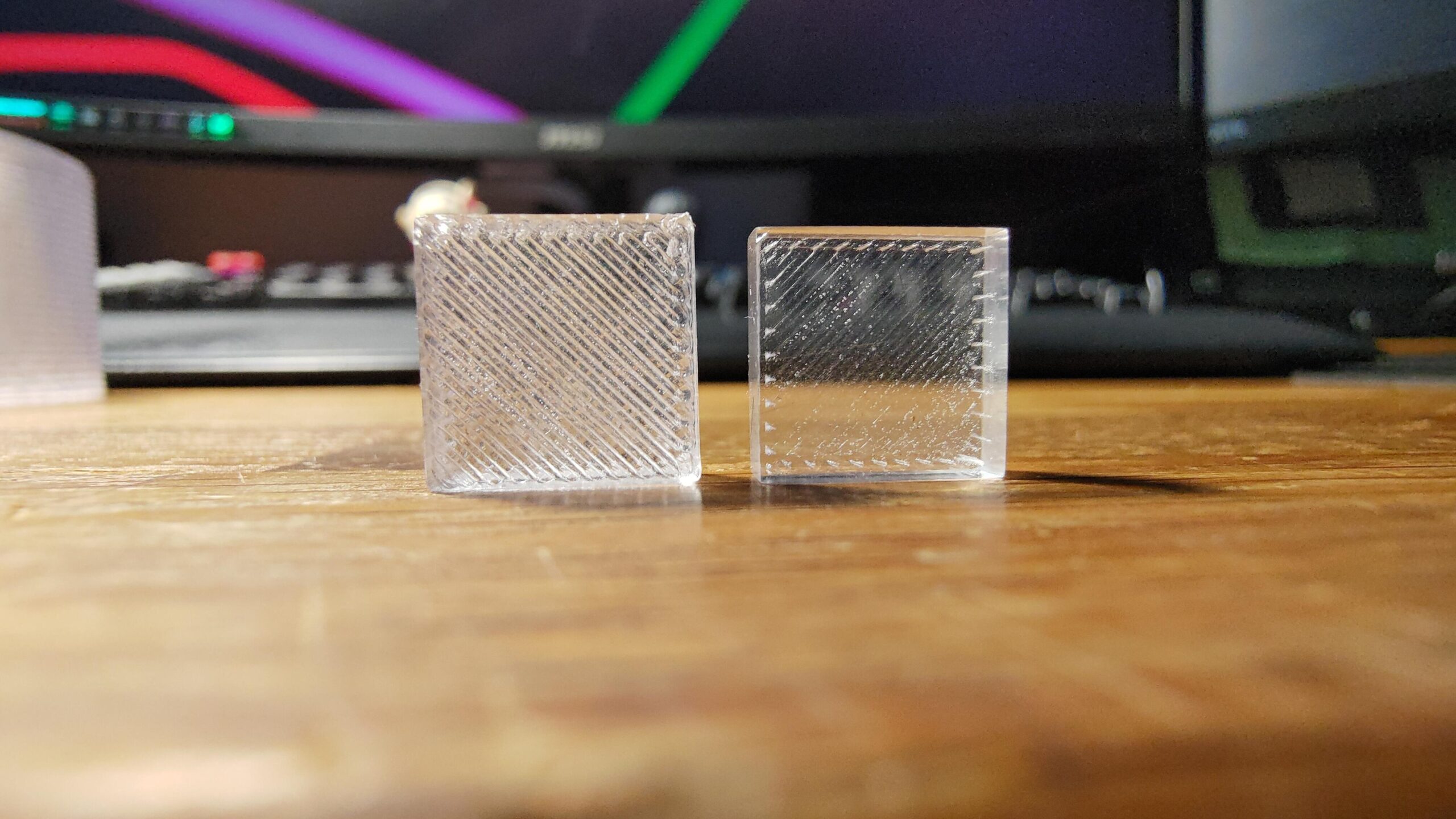
When you open a spool of the best transparent PLA, it looks exactly like a coil of thick fishing line or clear glass. However, just because the raw string is clear does not mean your final print will be completely see-through.
When your 3D printer builds an object, it stacks hundreds of tiny plastic lines on top of each other. It also fills the inside of the object with a grid pattern called “infill” to make it strong. All of these internal lines bounce light around, which ruins the clarity.
- Think of infill in a clear print like ice cubes in a glass of water. If you put one large, solid ice cube in a glass, you can still easily see through the water. But if you fill the glass with crushed ice, all the tiny edges scatter the light, turning the water into a cloudy, white blur.
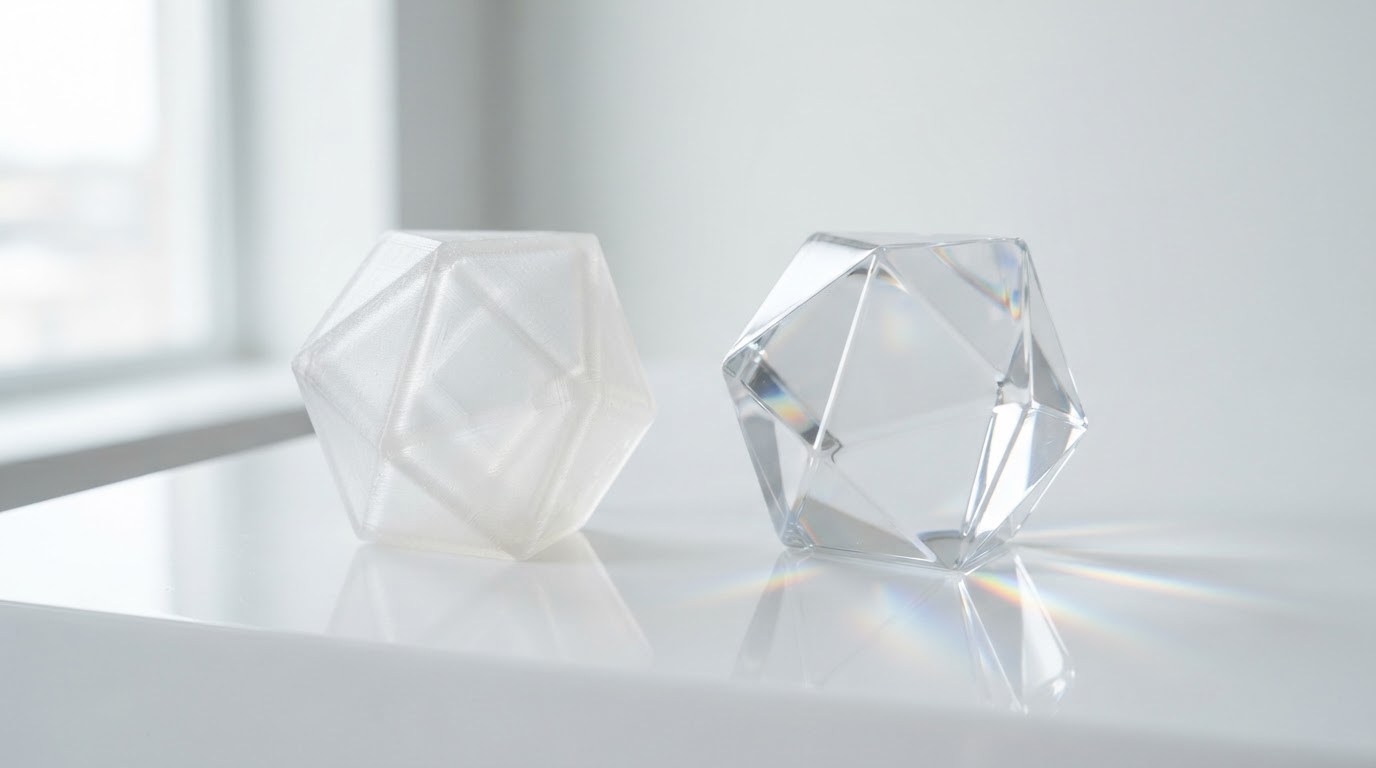
Because of this light scattering, a standard print with crystal PLA will look frosted, not like a perfectly clear window.
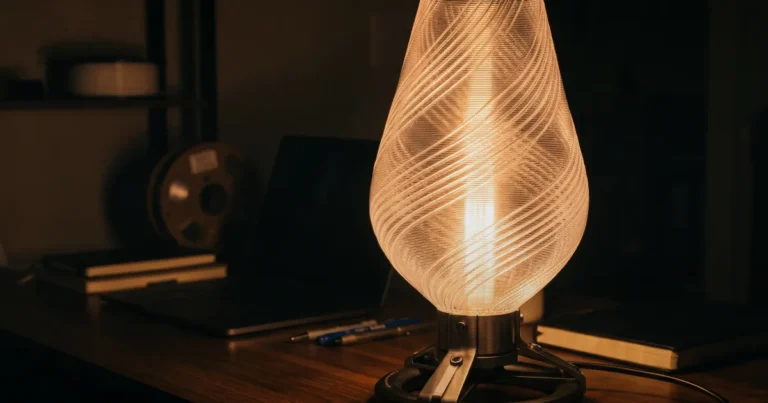
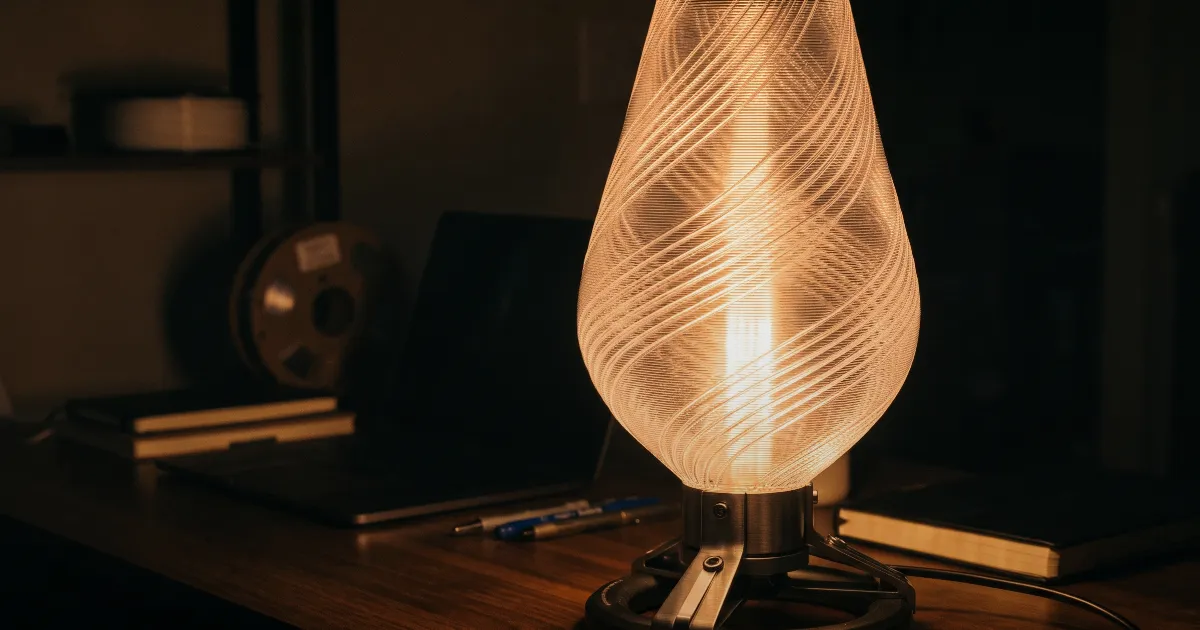
💡 Pro Tip: Because this material scatters light so beautifully, it is the absolute perfect choice for Designing 3D Printed Lamp Shades that glow warmly in your living room.
Is Translucent PLA Weaker Than Standard PLA?
A very common question makers ask before buying is: is translucent pla weaker than standard, solid-color filament?
Yes, translucent PLA is generally slightly more brittle than standard opaque PLA. The chemicals and dyes used to make standard filament a solid color also add a tiny bit of flexibility and strength to the plastic. Because transparent filament lacks these solid additives, it snaps much easier under heavy pressure.
- Think of clear PLA like hard candy, while standard PLA is like a chocolate bar. Hard candy is very tough if you tap on it, but if you try to bend it, it instantly snaps in half. A chocolate bar has a tiny bit of flex and give before it breaks.
You should never use crystal PLA for heavy-duty tools, load-bearing shelf brackets, or mechanical gears. Always save this beautiful material for visual projects, like a glowing LED desk sign or a light-up cosplay prop.
Comparing Brands: Sunlu Transparent PLA Review vs DART3D
If you search for random brands online, you will notice a recurring problem: moisture.
Clear plastic acts like a sponge for the humidity in your room. If a cheap spool of clear filament absorbs water from the air, that water will literally boil and pop when it hits your hot printer nozzle. These tiny steam explosions leave microscopic bubbles inside your plastic, permanently ruining the clear, glass-like effect.
To avoid this cloudy, bubbly mess, serious makers rely on DART3D’s premium effect filaments. DART3D sets the benchmark for high-quality, dry materials. Their crystal line is perfectly dried and vacuum-sealed at the factory, ensuring that your prints come out looking like smooth, flawless glass right out of the box.
💡 Pro Tip: If you love the unique look of clear plastic, you should also explore our list of the 7 Best Effect Filaments for Paint-Free Prints to discover more ways to upgrade your designs.
The Transparent PLA Reddit and Forum Consensus
If you browse any crystal pla review reddit thread or a crystal pla review forum, you will find that the community agrees on one major rule: you must change your printing style to get good results.
In every transparent pla reddit discussion, veteran makers will tell you that the only way to get a truly clear print is by printing a single, hollow wall. This technique removes all the internal layers and infill that usually block the light.
To do this, you use a slicer setting called “Vase Mode” (or Spiralize Outer Contour). This tells your printer to print the object like a hollow cup, using only one continuous, spiraling line of plastic.
💡 Pro Tip: To learn exactly how to use this community-favorite technique, read our step-by-step guide on Vase Mode Secrets: How to Get the Clearest Prints.
Perfecting Your Transparent PLA Settings Bambu (and Other Printers)
To get the most out of your transparent PLA bambu profiles (or any modern, high-speed 3D printer), you need to make some drastic changes to your speed and temperature.
Modern printers want to print as fast as possible. But if you print clear filament too quickly, the plastic does not have time to melt completely flat, leaving a cloudy finish.
To find the best transparent PLA settings Bambu users swear by, you must slow down and heat up.
- Think of printing clear plastic like pouring hot, thick maple syrup. If you try to pour the syrup fast while it is cold, it clumps up and traps a bunch of tiny, cloudy air bubbles. If you heat the syrup up in the microwave and pour it very slowly, it lays down in a perfectly clear, smooth, glass-like puddle.
Follow these highly practical settings for clear prints:
- Increase the Temperature: Raise your nozzle temperature to the highest safe limit for the filament (our Crystal Clear PLA page lists 190°C to 220°C, starting around 210°C). The hotter the plastic, the smoother and clearer it melts together.
- Print Very Slowly: Drop your printing speed all the way down to 20mm/s or 30mm/s. This slow speed gives the hot plastic time to settle perfectly flat.
- Increase Layer Height: Use thicker layers, like 0.28mm. Thicker layers mean there are fewer total layer lines on your print, which means fewer lines to block the light.
Conclusion
Printing with crystal PLA is one of the most rewarding challenges in 3D printing. While it takes a little bit of patience and some careful slicer adjustments, the results are absolutely stunning.
By turning up your heat, slowing down your speed, and utilizing vase mode, you can create breathtaking, light-transmitting home decor without painting or sanding. When you are ready to create flawless, glass-like projects, trust DART3D to provide the driest, highest-quality crystal filaments on the market so your designs shine perfectly every time.
Frequently Asked Questions about Crystal PLA
Is translucent PLA weaker than standard solid PLA?
Yes, translucent PLA is generally more brittle and weaker than standard PLA. The colored dyes and additives that make standard filament opaque also help strengthen the plastic. Crystal PLA lacks these additives, making it snap easier under heavy pressure. It should only be used for decorative items.
What are the best transparent PLA settings for Bambu printers?
To get the clearest results on a fast Bambu printer, you must intentionally slow the machine down. Set your print speed to a very slow 20mm/s to 30mm/s. You also need to raise your nozzle temperature toward the top of the listed range (up to 220°C on our Crystal Clear PLA) so the plastic melts perfectly smooth and clear.
Can you make transparent PLA completely clear like glass?
You can get very close to a glass-like finish, but it will never be 100% perfectly clear like a real window. To get the best clarity, you must print using “Vase Mode” in your slicer, which creates a hollow object with only a single, continuous outer wall, removing all light-blocking infill.
Why does my transparent PLA look cloudy and white?
Your print looks cloudy because the internal lines of the plastic are scattering the light. If you print with thick walls and high infill, the light bounces off all those internal plastic grids. Additionally, if you print too fast or at a temperature that is too low, the plastic cannot melt smoothly, resulting in a frosted, cloudy look.